

Driving in Rain UAE Rules: Complete Safety & Legal Guide 2026
Driving in Rain UAE Rules become critically important the moment weather conditions change across the Emirates. While the UAE is known for dry roads and high-speed highways, rainfall — even if infrequent — creates one of the most dangerous driving environments due to sudden loss of traction, reduced visibility, and unpredictable road behavior.
In Abu Dhabi and across the UAE, traffic laws do not change during rain — but driver responsibility increases significantly. Any failure to adapt to weather conditions may be treated as negligence or reckless driving under UAE law.

- UAE rain driving laws
- High-risk scenarios drivers must understand
- Advanced safety strategies
- Legal consequences of improper driving
- How to maintain full control and compliance
👉 To understand general driving regulations, read:
UAE Driving Laws Guide
⚖️ Legal Framework: Driving in Rain UAE Rules
Rain driving is regulated under:
- UAE Federal Traffic Law (Decree Law No. 14 of 2024)
- Enforcement by Abu Dhabi Police and local authorities
👉 Official source:
UAE Traffic Laws
Drivers must adapt their behavior to road and weather conditions at all times.
Failure to do so may be classified as:
- Negligent driving
- Reckless driving
- Endangering public safety
👉 This means that driving at normal speed during rain can still be considered a violation if conditions are unsafe.
🚨 Core Driving in Rain UAE Rules
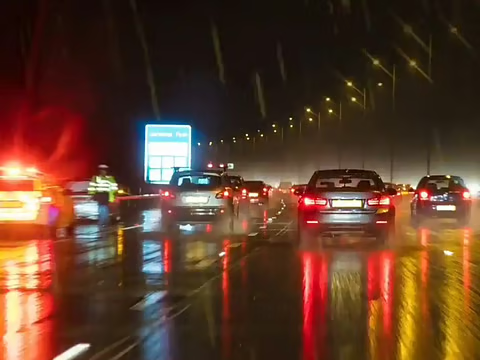
💡 1. Mandatory Use of Headlights
Headlights must be used during rain, regardless of time of day, to ensure:
- Vehicle visibility
- Road awareness
⚠️ 2. Speed Must Match Road Conditions
Speed limits represent maximum allowed speed — not safe speed.
👉 During rain:
- Reduce speed significantly
- Adjust based on visibility and water on the road
🚗 3. Increase Following Distance
Wet roads increase braking distance.
👉 Maintain at least double the normal distance.
🛑 4. Avoid Sudden Braking or Steering
- Skidding
- Loss of control
📵 5. Eliminate Distractions
Using a phone during rain multiplies risk and may lead to severe penalties.
⚠️ Advanced Risk Factors in UAE Rain Driving
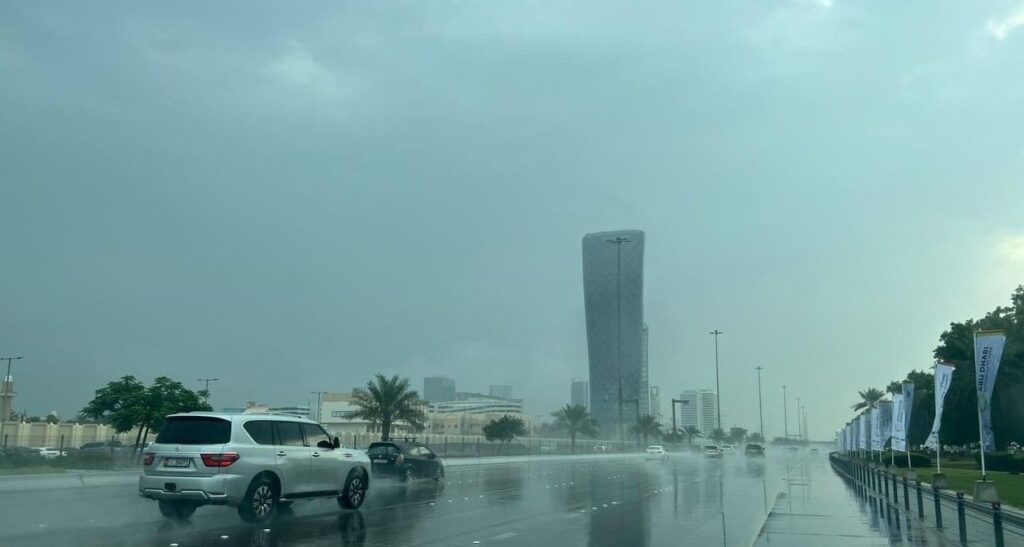
Rain introduces complex risks many drivers underestimate:
🌊 Hydroplaning (Critical Risk)
- Steering becomes ineffective
- Braking fails
👁️ Reduced Visibility
- Rain + headlights glare
- Fogging inside the car
🚧 Water Accumulation
- Hidden potholes
- Flooded road sections
😴 Driver Overconfidence
Many drivers underestimate rain risk in the UAE due to its rarity.
👉 This is one of the leading causes of accidents.
🚔 Legal Consequences of Unsafe Driving in Rain
- Driving at unsafe speed for conditions
- Not using headlights
- Causing accidents due to negligence
- Entering flooded or dangerous areas
📌 Possible penalties include:
- Fines
- Black points
- Vehicle impoundment
- Liability for damages
⚖️ Abu Dhabi Enforcement Approach
- Smart surveillance systems monitor behavior
- Police issue real-time warnings
- Hazard zones may be restricted
👉 Compliance is not optional — it is actively enforced.
🌧️ Additional Safety Insight During Rain
Another important aspect of Driving in Rain UAE Rules is understanding how quickly road conditions can change within minutes. Rain in the UAE often comes suddenly, and drivers may not be mentally prepared for the shift from dry to wet roads. This transition period is considered one of the most dangerous moments, as drivers continue at normal speed without adjusting their behavior.
During this time, even small actions such as gentle braking, gradual lane changes, and early decision-making can significantly reduce risk. Drivers should always anticipate unexpected situations, especially on highways where water accumulation may not be immediately visible. Staying alert and proactive is what separates safe driving from risky behavior in rain conditions.
🧾 Conclusion
Driving in rain in the UAE requires a complete shift in mindset. It is not about continuing normal driving habits — it is about adapting to a higher-risk environment where every decision matters.
safe driving is not determined by the weather — but by how you respond to it. 🌧️🚗