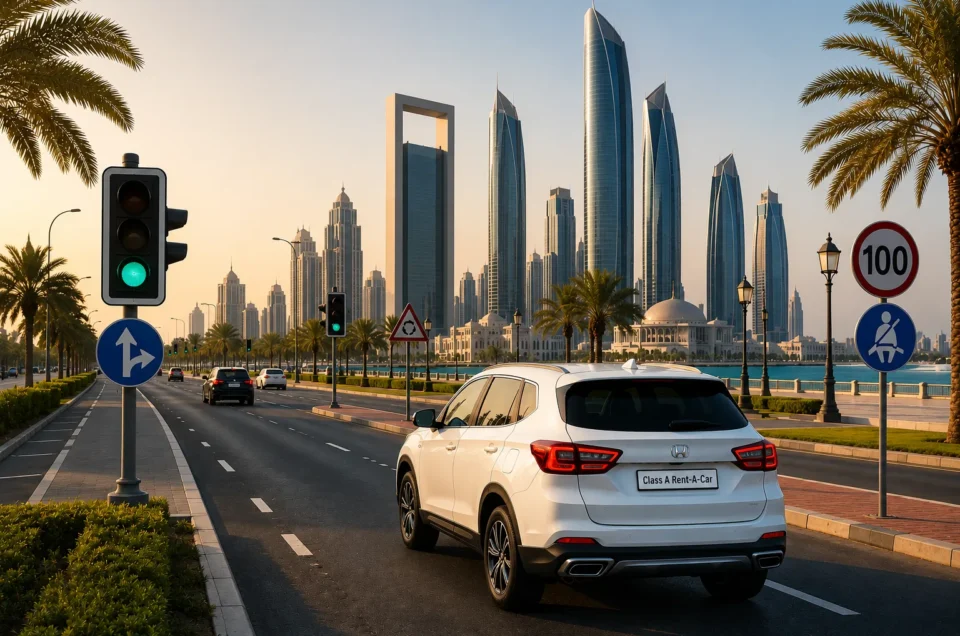

UAE Driving Laws: 11 Essential Rules for Safe Driving and Avoiding Fines
UAE Driving Laws regulate traffic behaviour across the United Arab Emirates and play an essential role in keeping roads safe for residents, tourists, and business visitors.
Understanding UAE Driving Laws helps drivers avoid fines, black points, and legal trouble while enjoying a safer and more confident driving experience in Abu Dhabi, Dubai, and across all emirates.
Traffic Rules UAE
Abu Dhabi Driving
Driving Fines UAE
Car Rental Abu Dhabi
Why UAE Driving Laws Matter
The United Arab Emirates has one of the most advanced road infrastructures in the world, supported by strict traffic laws in the UAE, modern surveillance systems, and a highly organized traffic framework. These laws are designed to reduce accidents, regulate vehicle movement, protect road users, and maintain a safe driving environment on highways, city roads, and residential streets.
Anyone planning to drive in cities such as Abu Dhabi or Dubai should understand these rules before getting behind the wheel. This is especially important for visitors, new residents, and drivers renting a car for short-term or long-term travel. The more clearly drivers understand UAE Driving Laws, the easier it becomes to stay compliant and avoid unnecessary fines or legal penalties.
For anyone using a rental vehicle, this awareness becomes even more valuable. Choosing a reliable provider such as Class A Rent A Car means driving a vehicle that is properly prepared, road-ready, and aligned with UAE legal requirements from the start.
UAE Driving Laws and traffic rules help keep driving safer and more organized across all emirates.
Table of Contents
Explore the main sections of this guide to better understand UAE Driving Laws, traffic rules, fines, and safe driving requirements.
01
Introduction to UAE Driving Laws
02
Driving License Requirements in the UAE
03
Minimum Driving Age in the UAE
04
Speed Limits Under UAE Driving Laws
06
Mobile Phone Laws While Driving
07
Traffic Fines and Black Points System
08
Common Traffic Violations in the UAE
09
Vehicle Registration Rules in the UAE
11
Driving in Abu Dhabi for Tourists
Introduction to UAE Driving Laws
The government enforces UAE Driving Laws to protect drivers, passengers, and pedestrians. These laws regulate driver behaviour, vehicle safety standards, road use, and traffic discipline across the country.
Following traffic laws in the UAE helps reduce road accidents and improves traffic flow, especially in busy cities like Abu Dhabi and Dubai where road activity is high and enforcement is strict.
Driving License Requirements in the UAE
Under UAE Driving Laws, drivers must hold a valid driving license issued by UAE authorities. This is one of the most important legal requirements before driving on public roads.
Residents must usually complete the following steps to obtain a license:
Once these steps are completed, drivers receive a UAE driving license that allows them to drive legally across all emirates.
Tourists may also drive in the UAE if they hold a valid license from approved countries or an international driving permit, depending on their nationality and travel status.
Minimum Driving Age in the UAE
According to UAE Driving Laws, the minimum legal age to drive a light vehicle in the UAE is 18 years old.
Drivers who want to obtain a UAE driving license must usually complete several steps, including an eye test, theory training, driving lessons, and a final road test approved by the traffic authorities.
However, most car rental companies in the UAE require drivers to be at least 21 years old in order to rent a vehicle.
For luxury cars or high-performance vehicles, the minimum rental age may increase to 25 years old, depending on the car rental company and insurance policies. These rules are designed to ensure that drivers have sufficient maturity and experience before driving on busy roads.
Speed Limits Under UAE Driving Laws
Typical speed limits in the UAE may vary depending on the road type and local traffic regulations. Drivers must always follow the posted speed limit signs on each road.
| Road Type | Speed Limit |
|---|---|
| Residential roads | 40 – 60 km/h |
| City roads | 60 – 80 km/h |
| Main roads | 80 – 100 km/h |
| Highways | 100 – 140 km/h |
The UAE uses advanced radar systems to monitor speed limits. Violating speed limits under UAE Driving Laws may result in fines, black points, and sometimes vehicle confiscation.
For official traffic regulations and updates, drivers can visit the
UAE Ministry of Interior website.
Seat Belt Rules in the UAE
Seat belts are mandatory under UAE Driving Laws for all passengers inside the vehicle.
Important safety rules include:
- All passengers must wear seat belts
- Children under 4 years old must use approved child safety seats
- Children under 10 years old or shorter than 145 cm should not sit in the front seat
These rules significantly reduce injuries during traffic accidents and improve overall road safety across the UAE.
Mobile Phone Laws While Driving in the UAE
Using a mobile phone while driving is illegal in the UAE unless a hands-free system is used.
Drivers who violate UAE Driving Laws by using phones while driving may receive traffic fines and black points on their driving license.
Distracted driving is considered one of the main causes of road accidents, which is why traffic laws in the UAE strictly prohibit using mobile phones while driving.
Traffic Fines and Black Points System
The UAE uses a black points system to track serious traffic violations.
If a driver accumulates 24 black points, their driving license may be suspended.
Examples of traffic violations include:
| Violation | Fine | Black Points |
|---|---|---|
| Speeding | From 600 AED | 6 |
| Running a red light | 1000 AED | 12 |
| Dangerous driving | Up to 2000 AED | 23 |
| Using phone while driving | 800 AED | 4 |
Understanding these penalties helps drivers follow UAE Driving Laws more responsibly and avoid costly mistakes.
Common Traffic Violations in the UAE
Many drivers in the UAE receive fines because they are not fully aware of common traffic violations. Understanding the most frequent violations can help drivers avoid penalties and follow UAE Driving Laws more carefully.
- Exceeding the speed limit on highways or city roads
- Running a red traffic light
- Using a mobile phone while driving without a hands-free system
- Not wearing a seat belt
- Driving dangerously or aggressively
- Parking in restricted or prohibited areas
These violations can result in traffic fines, black points on the driving license, and in serious cases vehicle confiscation.
Vehicle Registration Rules in the UAE
Vehicles must comply with UAE Driving Laws before being used on public roads.
Every vehicle in the UAE must meet the following legal requirements:
- Be registered with the traffic authorities
- Have valid vehicle insurance
- Pass periodic vehicle inspections
Driving an uninsured or unregistered vehicle is illegal under traffic laws in the UAE and may result in heavy fines or legal penalties.
Parking Rules in the UAE
Parking rules vary slightly between emirates, but drivers must follow official parking regulations in the UAE, especially in cities such as Abu Dhabi.
Common parking regulations include:
- Paid public parking zones
- Residential parking permits
- Strict penalties for illegal parking
Drivers should always check parking signs and local parking instructions before leaving their vehicle.
Driving in Abu Dhabi for Tourists
Driving in Abu Dhabi is generally easy due to modern infrastructure and organized traffic systems, but tourists must still follow driving regulations in the UAE carefully.
Visitors should carry:
- Passport
- Driving license
- International driving permit (if required)
If you are visiting the capital and need a vehicle, explore our
Car Rental Abu Dhabi
service.
Safe Driving Tips in the UAE
To drive safely in the UAE, drivers should follow these important tips:
- Respect speed limits
- Maintain a safe distance between vehicles
- Avoid aggressive driving
- Follow traffic signals and road signs
- Avoid using mobile phones while driving
These practices help drivers follow UAE traffic laws and improve road safety across the country.
Related Reading
Readers who want to explore more useful topics can also check:
- Traffic Laws UAE Explained
- Minimum Driving Age UAE
- Driving with Expired License UAE
- Car Rental Laws UAE
These related pages help drivers build a stronger understanding of legal driving requirements and safer vehicle use across the UAE.
Legal Disclaimer
Traffic laws and penalties in the United Arab Emirates may change over time and may vary depending on the emirate and specific circumstances. Drivers should always refer to the official UAE traffic authorities or the Ministry of Interior for the most accurate and updated information.
Drive with Confidence in Abu Dhabi
Whether you are a resident, tourist, or business visitor, following UAE Driving Laws is the foundation of a safer and smoother journey.
If you need a legal, well-maintained, and road-ready vehicle, choose Class A Rent A Car for a more reliable driving experience in Abu Dhabi.
Conclusion
Understanding traffic rules in the UAE is essential for anyone driving in the United Arab Emirates.
These laws help protect drivers, passengers, and pedestrians while maintaining organized traffic systems across the country.
By respecting UAE Driving Laws, drivers can enjoy a safer, more comfortable, and more responsible driving experience throughout the UAE.